

Some product stories begin in a laboratory. This one began with a missing tracker.
It happened during an ordinary afternoon near Windermere. One of our testers had gone into the water wearing his Meridia One, expecting nothing more unusual than a normal recreational dive. A few minutes later, he climbed back onto the jetty and realised his wrist was empty.
The buckle had caught against the metal ladder during the ascent. The strap released, and Meridia One slipped into roughly four metres of cold, cloudy water before disappearing into the darkness below.
This watch was found at the bottom of a lake in the UK
At first, the story looked like an expensive accident. But over the next 48 hours, it became something very different: an unplanned real-world test of the kind no controlled demonstration can fully reproduce.
There was no protective case. No special preparation. No laboratory conditions. Just a Meridia One tracker sitting at the bottom of a cold British lake.
Hour 0: the tracker disappears
The first thing the team did was mark the location from the jetty. That decision proved important. From the surface, the search area seemed small. Underwater, visibility was poor, the lake bed was covered in silt, and every movement disturbed the sediment.
The first recovery attempt failed. A second attempt later that day ended the same way. The tracker remained somewhere below, completely out of reach.
For anyone who wears a tracker every day, it is the kind of situation that immediately raises questions. Would the screen survive? Would water reach the electronics? Would the sensors still work? Would Bluetooth reconnect? And perhaps most importantly: would Meridia One still be useful if it ever came back to the surface?
Hour 6–24: nothing to do but wait
The team decided to stop searching and allow the sediment to settle. That meant leaving Meridia One underwater overnight. No drying. No charging. No reset. No intervention at all.
For a wearable designed to stay with you through workouts, travel, everyday activity and changing weather, durability matters for a simple reason: real life is rarely controlled.
You get caught in rain. You swim with your tracker. You sweat during training. You forget you are wearing it. And sometimes something happens that nobody could have planned. This was one of those moments.
The second day: preparing for another search
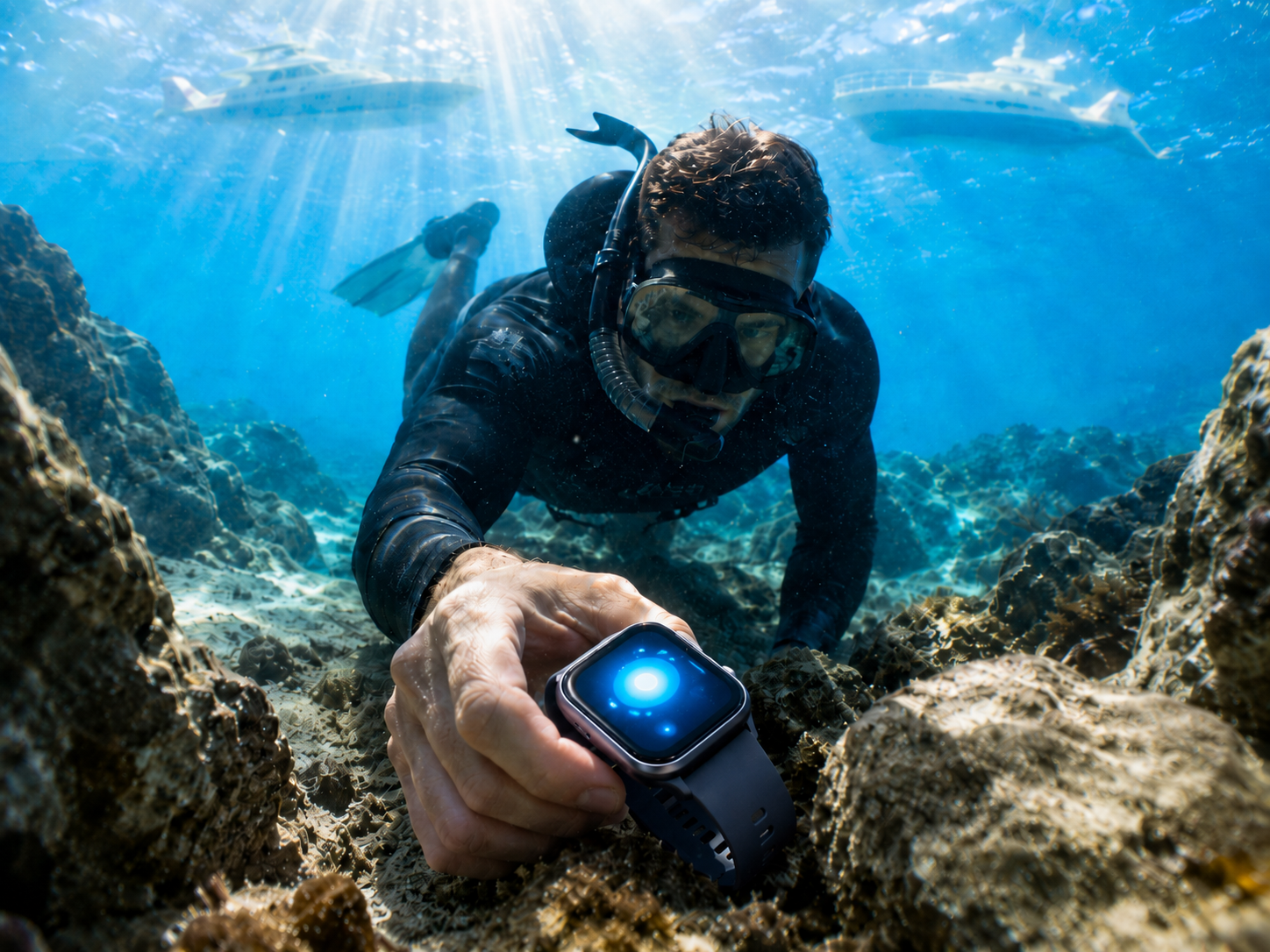
The following morning, the water was calmer. Our diver returned with a stronger underwater torch and began searching around the original GPS point.
The dark strap blended almost perfectly with stones and vegetation on the bottom. Even knowing where to look, finding it was difficult. Eventually, a small section of the band appeared between two stones.
Hour 48: recovery
Just short of two days after it disappeared, Meridia One was brought back to the surface.
This tracker spent 48 hours at the bottom of a lake.
The first surprise was visible immediately. The display was still active. There was no obvious condensation behind the screen. The casing showed no visible distortion, and the interface responded normally.
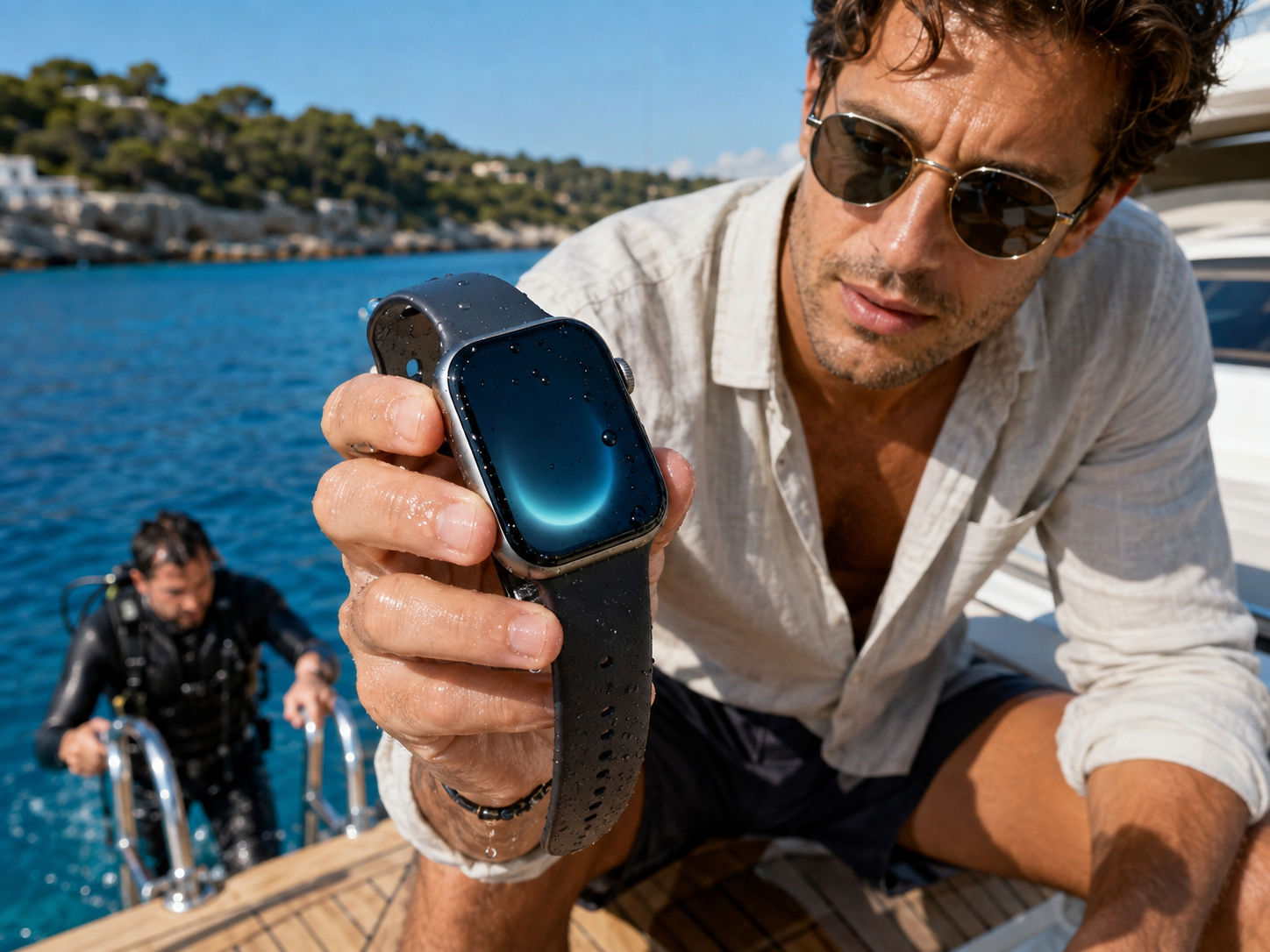
But a screen turning on is only part of the story. For a tracker designed to follow activity, recovery and everyday movement, the important question was whether the functions people actually rely on were still working. So we started testing.
The first live sensor check
The recovered Meridia One was placed back on a wrist while the team was still standing beside the lake. The heart-rate sensor began producing a reading within seconds.
It showed 84 beats per minute. The diver was also wearing a chest strap, giving us an immediate comparison, and the two readings matched at that moment.
One reading is not a scientific accuracy study, and we do not present it as one. What mattered was simpler: after two days underwater, the optical sensor was still operating. For a device designed to be worn throughout the day, that was a very encouraging first result.
The shore-side checklist
Next came the functions that make Meridia One useful beyond simply telling the time.
Battery: 61%. Bluetooth: connected to the phone in approximately 14 seconds. Movement tracking: working. Step counting: working during the walk back from the lake. Skin-temperature sensing: returned to a plausible range after the tracker warmed on the wrist.
There was no factory reset. No repair. No special recovery procedure. Meridia One simply reconnected and went back to doing what it was designed to do.
That is the part of the story we found most interesting. Not that a tracker survived an unusual accident, but that after surviving it, the product was still useful.
What happened to the strap?
The strap spent the same amount of time underwater as the electronics. After recovery, it was rinsed with fresh water and allowed to dry naturally.
Once dry, the team found no obvious swelling, cracking or deformation, and the buckle continued to close normally. The original accident happened because the strap caught on the ladder — not because it broke underwater.
It is an important distinction. This was never meant to be a stunt or an attempt to push Meridia One beyond its published specification. It was simply real life happening to a real product.
Why people noticed the story
There is a reason accidental tests often feel more convincing than carefully produced demonstrations. They are easy to understand.
Almost everyone has dropped something valuable. Almost everyone has worried about electronics near water. And anyone who wears a tracker daily has probably had that moment of wondering whether they should remove it before swimming, showering or heading out into bad weather.
A tracker spending two days at the bottom of a lake takes that familiar concern to an extreme.
People across the UK are talking about this tracker.
What makes the story interesting is that this was not a specially prepared prototype. It was a normal Meridia One being worn by a tester when an ordinary accident created an extraordinary real-world test.
What this actually proves
This story does not change the official specification of Meridia One. And we would never recommend intentionally leaving your tracker underwater for two days.
Meridia One remains rated to 5 ATM and tested in accordance with ISO 22810:2010. That is the specification customers should rely on for normal activities such as swimming, rain exposure, washing and showering under appropriate conditions.
The Windermere incident is something different. It is a real-world example of what happened when one Meridia One was subjected to an accident far outside an ordinary day.
And the result was simple: it came back. It powered on. It connected. It recorded movement. Its sensors continued working.
Why that matters when choosing a tracker
A wearable is most useful when you do not have to think about it all the time. You put it on in the morning. You walk. You train. You travel. You swim. You go about your day. And the tracker quietly collects the information that helps you understand your activity and recovery.
That is the idea behind Meridia One: a lightweight everyday tracker with optical heart-rate monitoring, HRV, skin-temperature sensing, movement tracking, Bluetooth connectivity and 5 ATM water resistance.
Those specifications matter. But sometimes a story shows what a specification sheet cannot.
Meridia One was not prepared for what happened at Windermere. It was not reinforced. It was not modified. It was not a special demonstration unit. It simply fell into a lake. And approximately 48 hours later, it was still doing its job.
What happened after the recovery
Back at the house, the tracker was rinsed with fresh water and allowed to dry before charging. The housing was not opened, and no repair was performed.
Over the following days, the team continued checking it for delayed problems such as battery instability, charging issues, condensation, sensor interruptions or connection problems. None appeared during the observation period.
The tracker continued to synchronise normally and remained functional. Eventually, it was brought back to the Birmingham office.
Today, it serves as a reminder of what product testing is really about. Specifications tell you what a product is designed to handle. Real life sometimes tells you a little more.
The part we did not plan
Meridia One was created to fit into everyday life. Not to become the subject of an underwater recovery operation. But that is exactly why this story matters.
Controlled testing gives us repeatable measurements and official specifications. Real life gives us rain, pools, travel, workouts, accidents and moments nobody can predict.
Straps catch on ladders. Things get dropped. Plans change. And sometimes a tracker spends two nights at the bottom of a lake.
This one came back working.
No staged challenge. No special preparation. Just a Meridia One, a very wet accident — and a surprisingly good reason to trust the tracker on your wrist.